> For the complete documentation index, see [llms.txt](https://tools.continis.io/llms.txt). Markdown versions of documentation pages are available by appending `.md` to page URLs; this page is available as [Markdown](https://tools.continis.io/scene-notes/using-the-tool/creating-and-editing-notes.md).
# Creating and editing notes
## Creating a new note
To create a new Note, focus on the spot in the scene where you want to create it, and click the Plus button.
{% hint style="info" %}
The new Scene Note will be associated with the scene that is the currently Active scene. You can always change the scene later.
{% endhint %}
## Editing a note
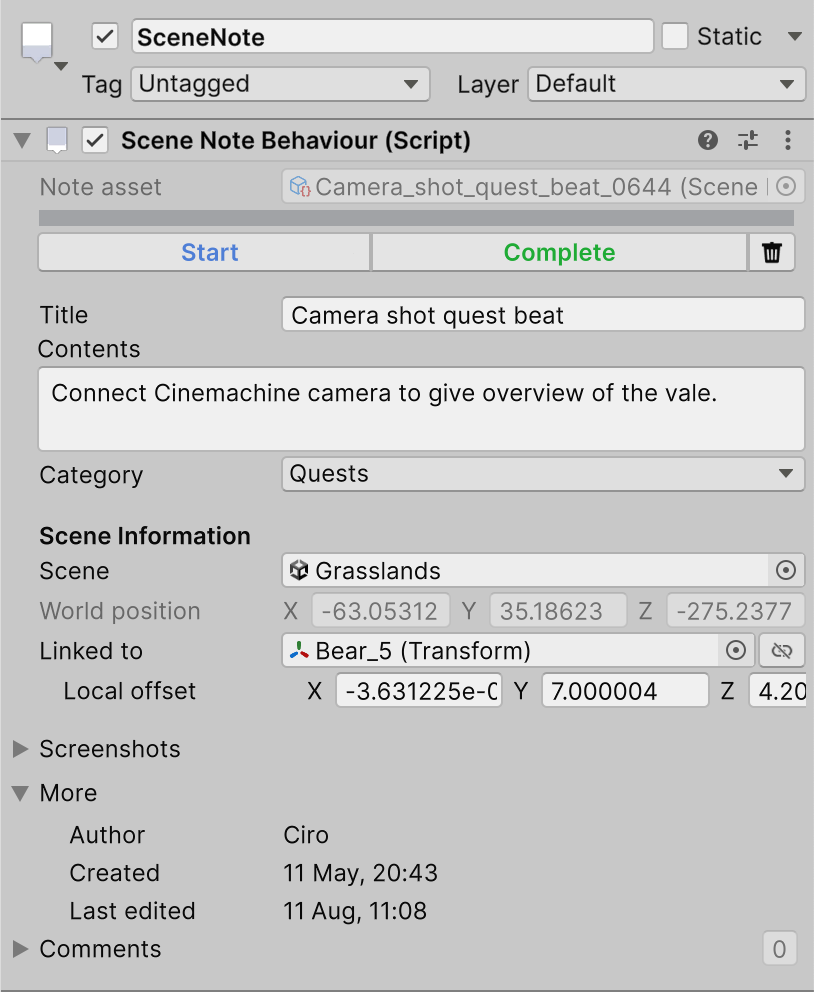
You can edit the data of a Scene Note by just selecting it in the scene, and editing the data in the Inspector:
The Inspector of a Scene Note
Alternatively, you can edit [the ScriptableObject](/scene-notes/other/data-and-folders.md#data-format) directly.
## Note properties
### Note state
All notes have a state, which by default is "Not started". The state is reflected in the coloured bar at the top of the note's Inspector. You can change a note's state by just clicking the buttons under the bar.
An unstarted note
A completed note
The possible states are:
* Not started: grey bar
* In progress: blue bar
* Done: green bar
The meaning that you give to each status is up to you and your team.
### Title
The title of the note. Changing this will rename [the associated ScriptableObject](/scene-notes/other/data-and-folders.md#data-format) file.
If note titles are set to display in [Project Settings](/scene-notes/other/project-settings.md), will be shown below the note's icon in the Scene View.
### Contents
The main text of a note.
### Category
The category the note belongs to, used for [filtering](/scene-notes/organising-notes/filtering-notes.md#filtering-notes-by-category) and icons. Refer to [Handling categories](/scene-notes/organising-notes/handling-categories.md) for more information.
### Scene
You can freely reassign a different scene to the **Scene** field.
{% hint style="info" %}
Keep in mind that reassigning a scene will move the [ScriptableObject](/scene-notes/other/data-and-folders.md) for the note, and might make the note disappear from the Scene View if the specific scene is not currently loaded.
{% endhint %}
### Linked GameObject
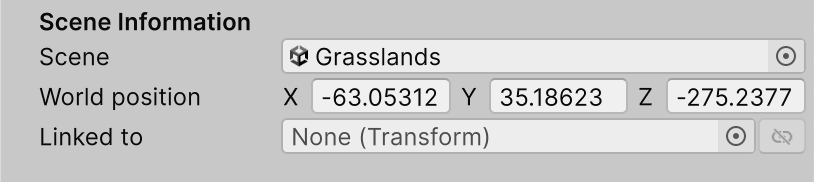
If a note is not linked to any object, it's just placed with a **World position** in the scene, and you can edit it here.
The Scene information section of a note
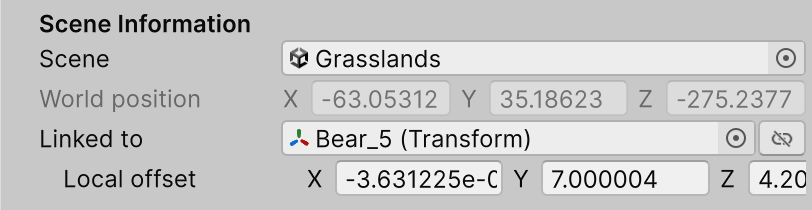
If a GameObject is dragged into the **Linked to** field, the note becomes linked to that GameObject. When that object moves or rotates, the note moves with it. As such, while the note still has a world position, this will not be editable: what matters is the **Local offset**, which can be tweaked at the bottom of this section:
This note is linked to a GameObject
{% hint style="info" %}
Deleting the GameObject linked doesn't delete the note, it just unlinks it.
{% endhint %}
### Screenshots
You can attach screenshots (or any image) to a note or to comments.
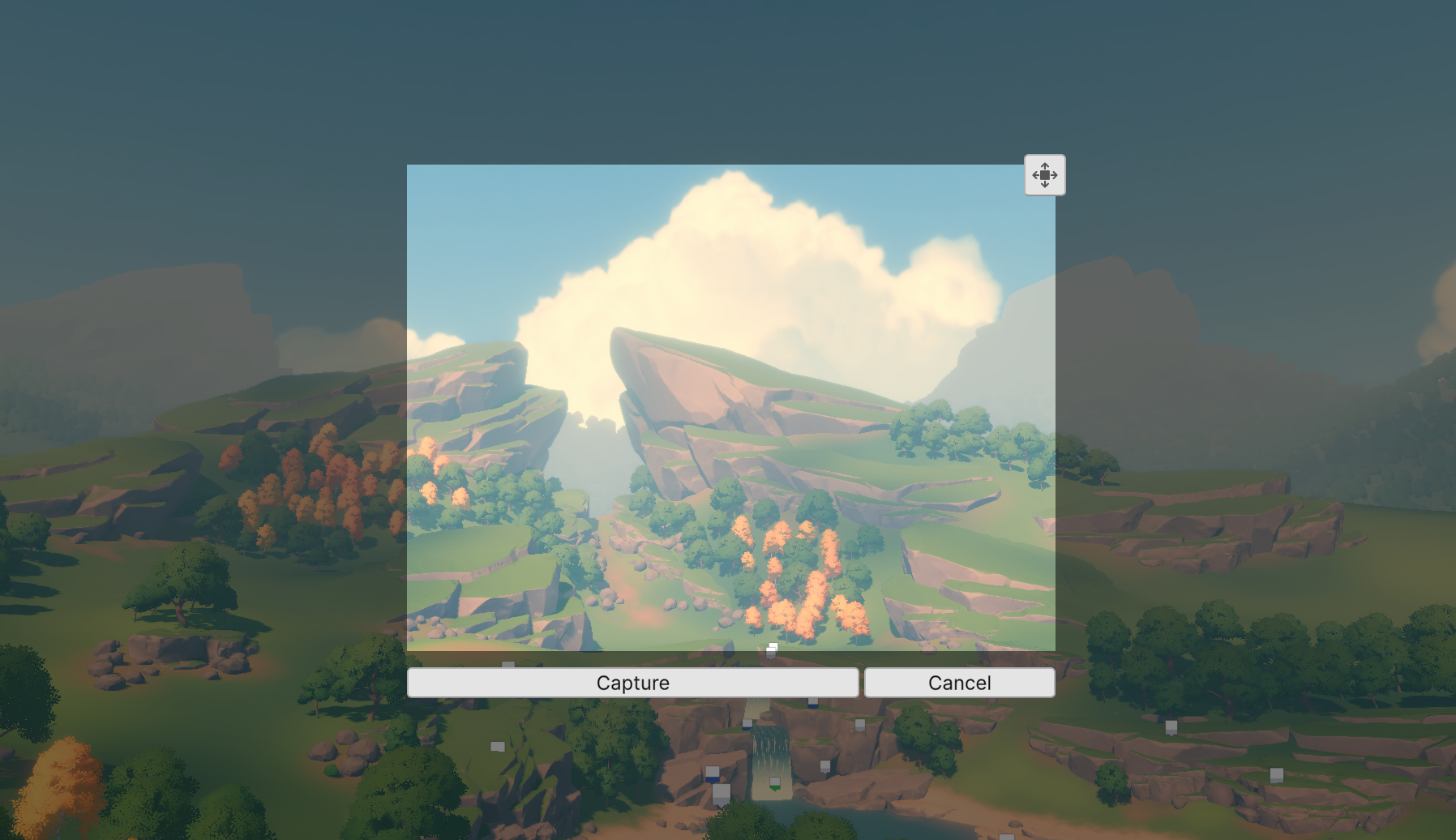
To take a screenshot directly in the Scene View, click the button. An overlay will appear in the Scene View:
Capturing a screenshot
Screenshots captured this way will be saved in the 📁 `Screenshots` folder, right under the [data folder](/scene-notes/other/data-and-folders.md).
After taking a screenshot, you can potentially link it to another note by just manually adding it to the other note's list.
Handling these screenshots is up to you: removing a linked screenshot from a note doesn't delete the corresponding image.
{% hint style="info" %}
The data folder path can be specified in [Project Settings](/scene-notes/other/project-settings.md).
{% endhint %}
### More
This section contains info about the note's author, when the note was created and when it was last edited. This data is not editable.
{% hint style="info" %}
You can change the name used to sign your notes in [Project Settings](/scene-notes/other/project-settings.md).
{% endhint %}
### Comments
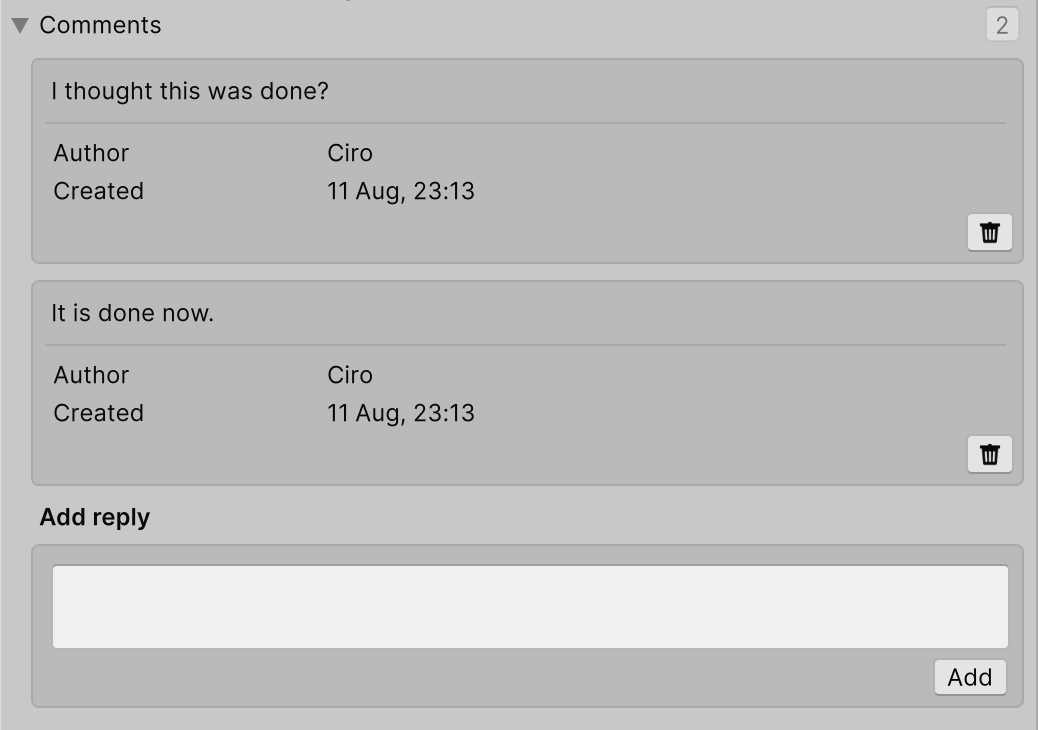
This section is a lightweight comment thread that belongs to the note. To add comments, simply use the UI to add a new one. After that, you'd need to commit the note using whatever Version Control system you use, at which point your teammates can reply.
Two comments, and the reply box
Comments cannot be edited, only deleted.
{% hint style="info" %}
You can change the name used to sign your comments in [Project Settings](/scene-notes/other/project-settings.md).
{% endhint %}
## Deleting a note
To delete a note, press the trash button on the note's toolbar:
The [ScriptableObject](/scene-notes/other/data-and-folders.md) representing the note will be immediately deleted.